Pacific AI & Data Sovereignty
· 3 min read


This essay is part of a thread on AI, data sovereignty, and Pasifika in technology. See the Pacific AI & Data Sovereignty hub for the full collection. Related: Technology Is Political, The Inevitability of AI.
Talofa reader,
I had an encounter the other week, with a smart, very capable young Pasifika person on my Discord who said they're not political because they're "either not interested in it or ... too busy living life and having fun to do anything about it".
And I went, "ooh, that's quite the take", and we went back and forth a few times, but ultimately we just parked it. I had to sit with it for a little while after, to figure out why that encounter really rubbed me the wrong way.
This isn't about this young Pasifika person, not at all. Everyone's free to their opinions and to live their own lives, 100%. So, given that, why did this irk me so much?
This essay is part of a thread on AI, data sovereignty, and Pasifika in technology. See the Pacific AI & Data Sovereignty hub for the full collection. Related: Data Sovereignty & The Cloud, The Inevitability of AI.
Talofa reader,
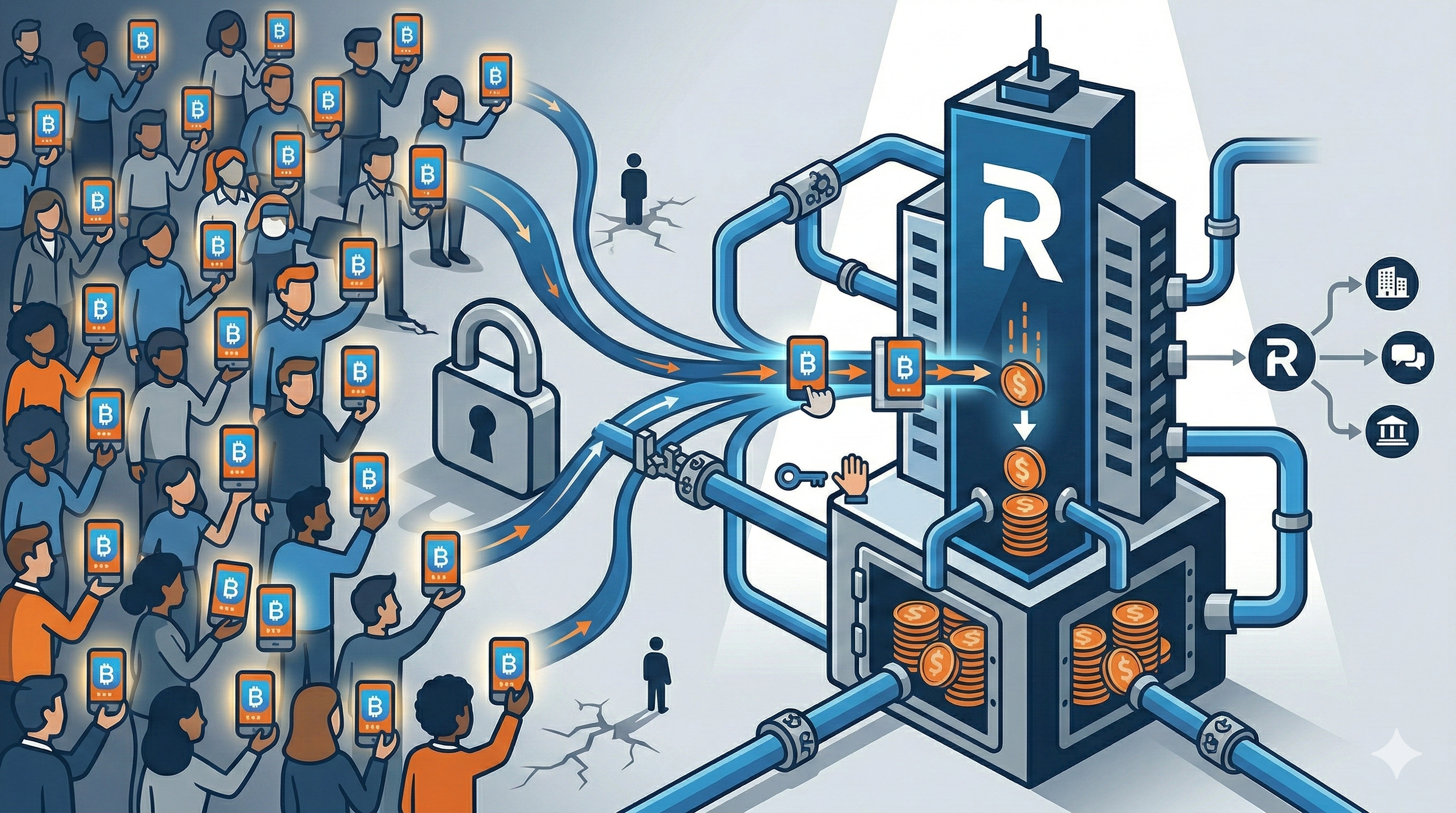
Anthropic dropped $8 million on a Super Bowl ad to tell you Claude is ad-free. I posted this about it the other week. The internet immediately started debating whether that's sustainable.
Anthropic pulls $4.5B from enterprise. OpenAI gets 75% from consumers. Both are burning billions. Which model wins?
I got into a thread about this on LinkedIn and someone brought up an interesting angle — what about companies that let you monetise your OWN data? What if the consumer gets a cut?
Which led me to River.
Talofa reader,
I know it's been some time between posts, but thanks for making the move with me from Substack to Beehiiv.
This essay is part of a thread on AI, data sovereignty, and Pasifika in technology. See the Pacific AI & Data Sovereignty hub for the full collection. Related: Beyond Netflix: AI Literacy Among Indigenous Tech Leaders, There is no Pasifika in Tech Problem.
Talofa reader,
The "digital divide" is a term I've been hearing since I first got into community work with my charity back in 2017. Back then, researchers from the '90s had this simple way of looking at it - you either had computers and internet, or you didn't. Pretty straightforward stuff: get people devices, hook them up to the internet, problem solved. The lack of Pasifika representation in IT was wrapped up in this whole narrative.
But here's the thing - the research has come a long way since then. JAN A. G. M. Van Dijk's 2020 book "The Digital Divide" shows it's way more complex than just having a device and internet connection. Just because you've got the hardware doesn't mean you're actually participating in the digital economy in any meaningful way.
I didn’t really buy the whole "just get them devices" thinking. I knew it was an important step, for sure, but in my experience that device never made the techie.
So, after working in this space for a few years, something started nagging at me.
The real challenge facing Pasifika wasn't what everyone thought it was. And I knew this because it was exactly what had helped me succeed in tech myself.
But something wasn't adding up.
This essay is part of a thread on AI, data sovereignty, and Pasifika in technology. See the Pacific AI & Data Sovereignty hub for the full collection. Related: The Knowledge Gap: Rethinking the Digital Divide for Pasifika, Pasifika Need Tech Leaders Who Are Technical.
Talofa reader,
I had some thoughts recently on this topic, and after a live stream and discord discussion, wanted to note things down.
Talofa reader,
A few weeks ago, I made the relatively easy decision to wind down The Pasifika Tech Network.
"Failed project" may be a harsh way to put it, but I think there's value in calling something what it is, so you can better understand how not to do it again in future.
This is a project that failed.
Ok, but what did it fail to do? And why?
To understand that, we have to go back to the beginning and look at why it was created in the first place; what its intended goal was; and the reasons it wasn't able to live up to this.
Talofa reader,
Last weekend, I was fortunate enough to get invited to attend ‘Ngā Tohu Matihiko | Celebrating Māori Excellence in Digital and Technology’ Awards at the Due Drop Centre, in Manukau.
The event was really well run1. The layout, design, and production quality in the lighting, sound, and visuals were on par with some of the best events I’ve been to, including the NZ Music Awards, Rhythm & Vines main stages, NZ Homegrown, and shows at Vector Arena2.
All, I imagine, on a budget much lower than those events.
This, in my opinion, is the true sign of excellence—making the most of what you have. This has been a feature of the Māori people as I’ve known them my whole life. Don’t let the news channels and newspapers' anti-Māori propaganda fool you into believing the usual rubbish about any brown community. Once you actually look into and experience people for yourself, you’ll quickly see the truth.
Māori are rich in history, culture, empathy, and humanity for everyone in NZ and around the world. Yes, they’re “people”, and people are complex. You’ll have those who aren’t happy about one issue or disagree on outcomes and decisions about other things.
This is called the human condition and is not unique to Māori or their community. All human communities will have their positives and their negatives—or “room for improvements”.
I’m often surprised, as an adult, that this has to be stated so often, so loudly, and so widely. I knew this as a kid; everything had “pros and cons”, “ups and downs”, “swings and roundabouts”. It was so obvious as a kid that life and everything in it was “yin and yang”. So why, as adults, has it become so complicated?
Why is it suddenly not a “spectrum” and it’s all black and white?
Sure, Israel and the genocidal Zionists have murdered 16,000 Palestinian children. Something like that is clearly black and white to me, as in capital ‘W’, wrong.
But I digress. Why am I recounting my experience at the Māori Tech Awards?
I guess, mainly to document and share my thoughts as a Pasifika person living in NZ, watching a Māori event.
This essay is part of a thread on AI, data sovereignty, and Pasifika in technology. See the Pacific AI & Data Sovereignty hub for the full collection. Related: Pasifika Need Tech Leaders Who Are Technical, The Inevitability of AI.
Talofa reader,
I often tell the story of what first got me into thinking about tech, so for this edition, I thought I’d dive deep into what made it such a life-changing point in my life.
Without a doubt, it was getting "hacked" by a high school friend over ICQ late one night while chatting.
That opened my eyes to what was possible with a little knowledge and skill with tech.
From then on, I was hooked.
I couldn’t wait to get my course costs from my university loan to buy my own, very first computer, an Acer laptop.
Real hackers run Linux, so I installed RedHat 5.2—no dual boot, just deleted Windows.
Linux straight, no chaser.
For the next, what seemed like ‘always’, I would battle it out with device drivers, getting my sound card to work, getting my video card to work, learning how to configure, compile and install my own kernels to ensure things worked.
My obsession with getting really good at wielding the power of computing, networking, and programming drove me to learn anything and everything from the hardware up through all 7 OSI layers.
I can’t even hazard a guess at how many hours all up I spent on learning, breaking, and fixing computers, how many all-nighters, weekends, and public holidays I spent just hacking on things.
I thought I just wanted to be a 31337 hax0r, and that was my obsession…
But it wasn’t until I came across a piece of writing, iconic in hacking culture, that I realised hacking was more than computer tricks for me…
That piece of writing was the hacker's manifesto.
TheHackers Manifesto1is a short essay written Lloyd Blankenship aka"The Mentor"of the infamous hacker group"Legion of Doom".
It featured in Issue 7, of equally infamous Hacker Magazine “Phrack” in 1986, and has been cited in popular culture, like the movie Hackers, The Social Network and in Edward Snowden’s autobiography.
You can read it yourself, but it’s the perspective of a smart kid, misunderstood and dismissed by his teachers, bored and unchallenged at school, who finds a world that challenges and teaches him, whereinformation is free.
Sure- if you're familiar with the manifesto- you might think it's cheesy, a bit cringe, “of it’s time” etc.
But I can’t deny the sentiment of"The Mentor"vibed somewhere deep in me.
Why?
Good question.
The manifesto sounded like it was written by a palagi kid, from the U.S., I’m going to go out on a limb here and say probably from a decent home (one that had a computer at least).
So what did we have in common?2
Talofa reader,
I was actually working on another piece about how AI and it’s practical implications in the ‘hood, but got stuck having to hand wave off a concept of how I live in two different worlds at the same time, all the time.
I figured it would just be easier to write this one first, and then I can refer back to it anytime I have to run scenarios that require the reader to “get where I’m coming from”, essentially.
Let’s begin.
ShareIn my reality, I've always known I live in two worlds simultaneously.
The non-brown world, the one I experience with everyone else who's white basically.
Let’s call this world, “tech world”.
And the "brown" world, the one where, y'know, I'm a brown Pasifika guy.
We can call this “home world”.